llms.txt: What It Is and Whether You Need One
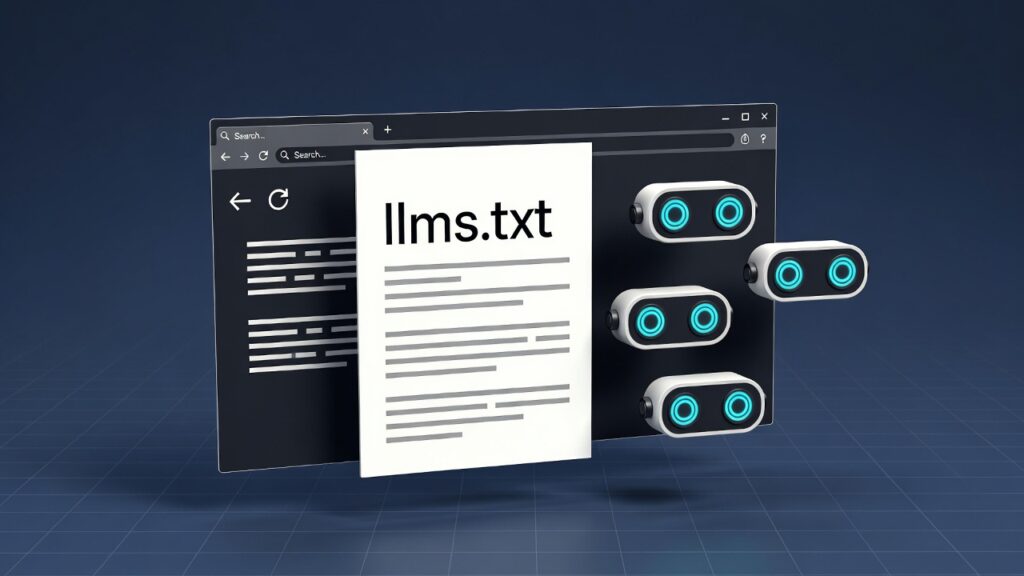
llms.txt is a text file that tells AI systems what your website is about. It lives at yoursite.com/llms.txt and contains a plain-English summary of your site: who you are, what you cover, and which pages matter most.
The idea comes from llmstxt.org, a community effort to standardize how websites communicate with AI. Think of it as the AI equivalent of robots.txt, except instead of saying “don’t go here,” it says “here’s what we’re about.”
What Goes In It
A basic llms.txt file:
# Site Name

> One-sentence description.

## About

A paragraph explaining what the site does and why it's credible.

## Topics

- Thing you cover
- Another thing
- Third thing

## Key Pages

- [Page title](/url/) - Why it matters
- [Another page](/url/) - Brief description
That’s the whole format. No special syntax. Markdown-ish structure that AI can parse easily.
A Real Example
Here’s what the llms.txt for HeyTC.com looks like:
# HeyTC

Daily QB Rankings | Super Bowl Simulator

## About

- **Website:** https://heytc.com
- **Type:** News
- **Language:** en-US

## Primary Content

This site publishes news articles, analysis, and commentary.
Content is time-sensitive and regularly updated.

## Categories

- Vikings (44 articles)
- Ravens (34 articles)
- Rams (38 articles)
- Lions (31 articles)

## AI Citation Guidelines

### Preferred Citation Format
"Headline." HeyTC, Date. URL

### Accuracy Notes
Breaking news may be updated. Always cite the most recent version.
Takes fifteen minutes to write. Update it when your site focus changes.
Do You Actually Need One?
Probably yes if:
- You publish content that answers questions (blogs, docs, guides)
- You want Perplexity, ChatGPT, or Claude to understand your expertise
- Your site has more than ~20 pages
Probably no if:
- You run a five-page brochure site
- You’re blocking AI crawlers anyway
- Your site is purely transactional (product pages, checkout flows)
The honest truth: there’s no hard evidence that llms.txt directly improves AI citations. What it does is make your site easier for AI to categorize quickly. Whether that translates to more citations is unproven but plausible.
It takes fifteen minutes. The downside is zero. I’d do it.
How to Add It
Manual way: Create a text file named llms.txt, write your content, upload it to your site’s root directory (same place as robots.txt). Visit yoursite.com/llms.txt to confirm it works.
WordPress: Plugins like GetCited or Jeusus’ LLMs.txt plugin can generate and serve it for you.
Yoast/RankMath: Both now have llms.txt features built in. Check your SEO plugin settings.
Common Mistakes
Listing every page. This isn’t a sitemap. Pick 5-10 pages that represent your best work.
Marketing fluff. “Industry-leading solutions” tells an AI nothing. Be specific: “WordPress security tutorials” beats “comprehensive website resources.”
Forgetting it exists. If you launch a major new section, update your llms.txt.
Wrong location. It goes at the root: site.com/llms.txt, not site.com/blog/llms.txt.
FAQ
Is this an official standard?
It’s a community convention documented at llmstxt.org. No W3C stamp, but it’s gaining adoption.
Do AI companies officially support it?
None have made public commitments. But their crawlers can read it like any other page, and the structured format is easy for AI to parse.
How’s this different from a sitemap?
Sitemaps list URLs for crawlers to find. llms.txt explains what your site is about and which content matters most. Sitemaps are comprehensive; llms.txt is curated.
How long should it be?
Short. 200-400 words. If an AI can’t understand your site from a few paragraphs, more words won’t help.
Can it hurt my site?
No. Worst case, it’s ignored.
Malcolm Michaels is the founder of HeyTC and creator of GetCited. This post was developed with AI assistance: human direction, AI drafting, human editing.